

-

Where to Place an Air Quality Monitor in Your Home
A useful reading starts with a useful location. Choose a position that represents the room you want to understand and avoid direct drafts, breathing and local sources. -

CO₂ vs PM2.5 vs TVOC: How to Read Your Air Quality Monitor
Each air quality reading answers a different question. Learn how to interpret changes using the unit, measurement period and activities in your room. -

Can an Air Quality Monitor Detect Radon?
· A good air quality score does not confirm a low radon concentration. Check which pollutants your device actually measures before relying on its display. -
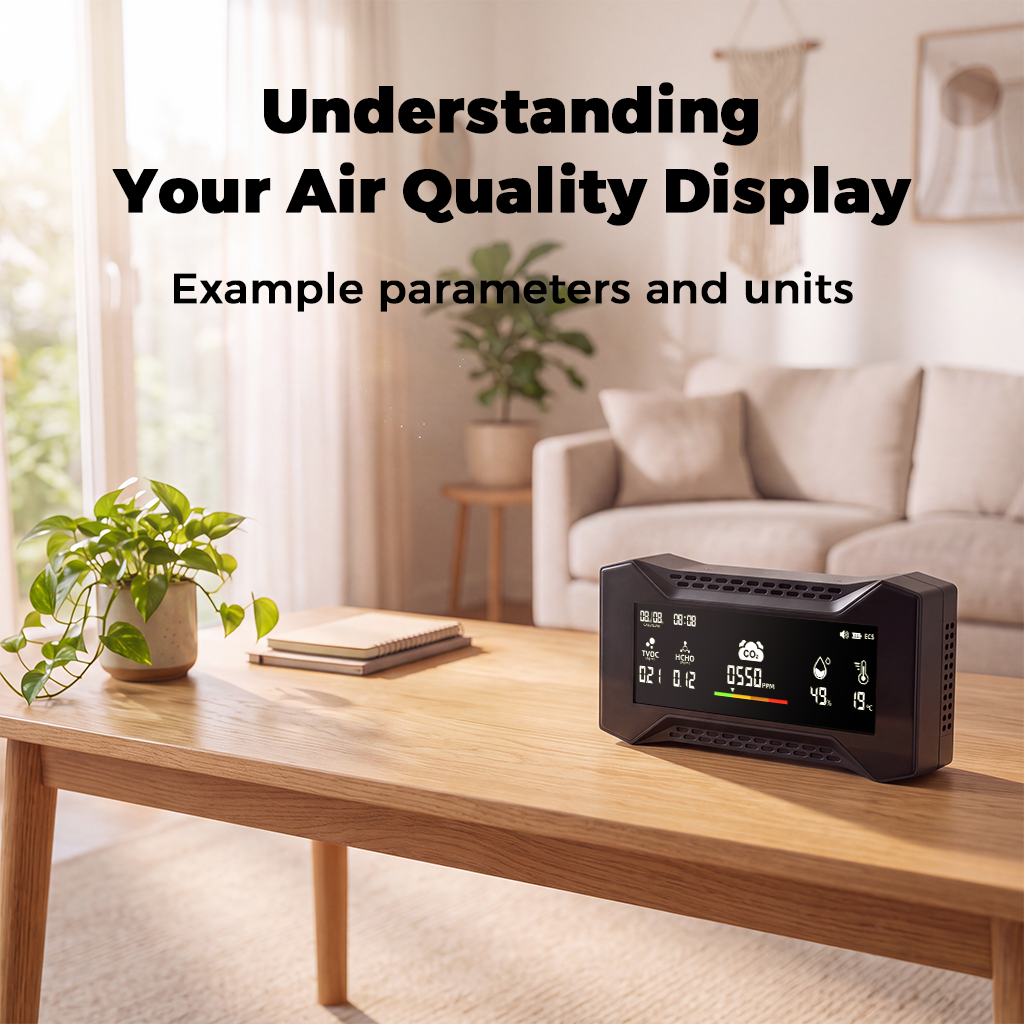
What Does an Air Quality Monitor Measure? CO₂, PM2.5, TVOC,HCHO, Pollen and More
Air quality monitors measure specific pollutants and environmental conditions. Find out what common readings tell you and what remains outside a device’s capabilities. -

What Is Indoor Air Quality (IAQ)? Definition, Standards, Pollutants, and How to Improve It
What Is Indoor Air Quality (IAQ)? Indoor Air Quality (IAQ) refers to the quality of air inside buildings and enclosed spaces, especially as it relates to the health, comfort, and well-being of occupants. IAQ is influenced by indoor pollutants, ventilation rates, humidity, temperature, and building materials. We spend most of our time indoors, whether in our homes, offices, shopping malls, restaurants, or other public environments.... -
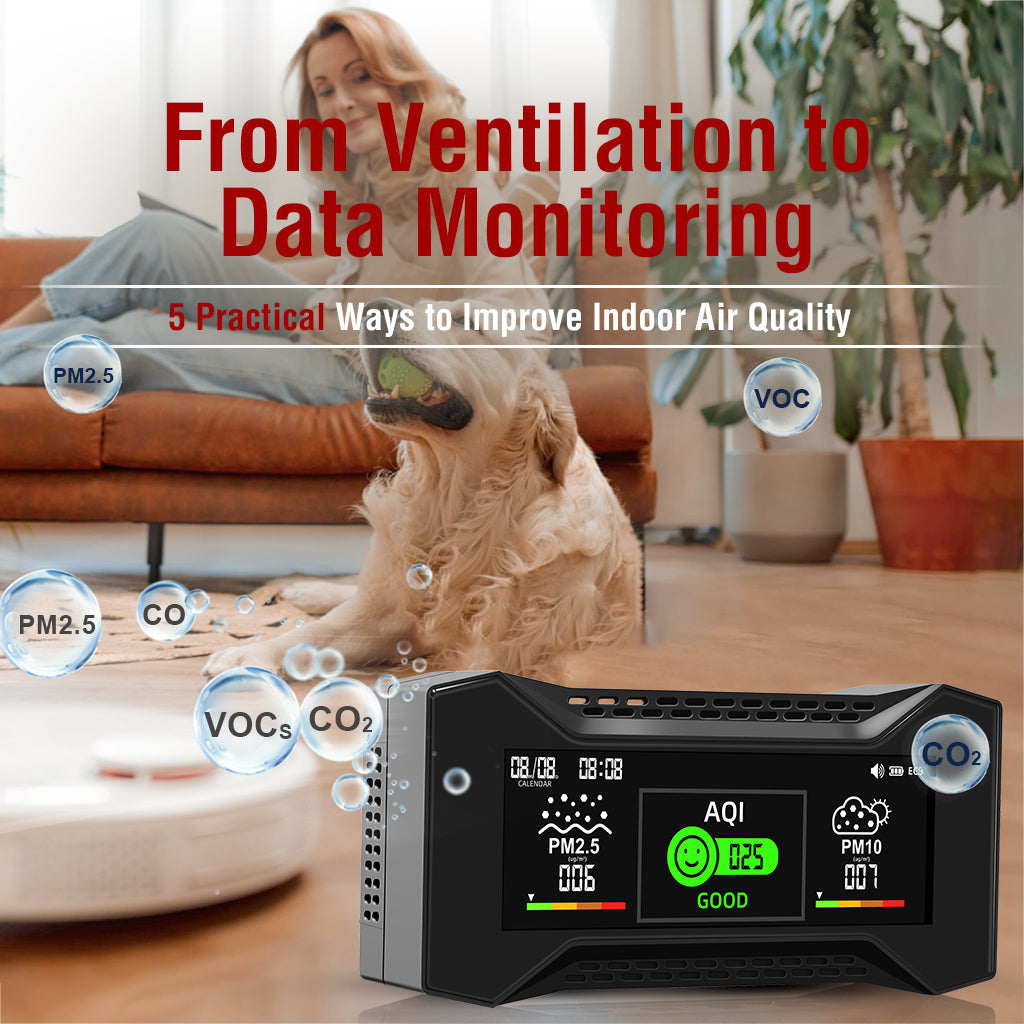
From Ventilation to Data Monitoring: 5 Practical Ways to Improve Indoor Air Quality
The Invisible Threat to Your Health Did you know that indoor air pollution can be 2–5 times more severe than outdoor pollution? Indoor air quality has a direct impact on our health, sleep quality, and overall comfort. Pollutants such as formaldehyde, dust, pollen, pet dander, and volatile organic compounds (VOCs) often exist silently inside our homes. The good news is that improving indoor air...


